


As I continued exploring Afghanistan through literature, I could hardly avoid one of the most interesting - and controversial - stories surrounding a modern bestseller: Norwegian journalist Åsne Seierstad’s The Bookseller of Kabul.
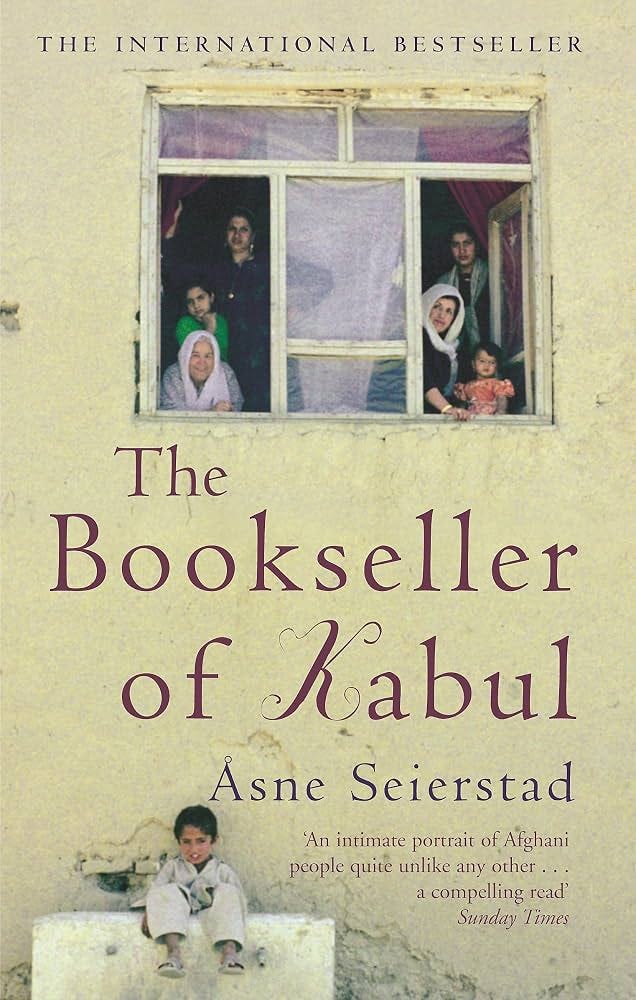
The book sits somewhere between literary journalism and narrative nonfiction. Seierstad tells a real family’s story using many of the techniques of fiction: sharply drawn characters, dramatic scenes and an extremely close, almost intimate view of everyday life inside an Afghan household.
The basic story is this.
After the fall of the Taliban regime in 2001, Seierstad accepted the hospitality of a bookseller in Kabul and lived with his family for around five months. During that time, she spoke to family members, observed their daily lives and recorded what she considered revealing or important.
The result was an unforgettable portrait of a man who had fought for freedom of expression in Afghanistan while, at the same time, exercising considerable control over the women in his own family.
And yes, it is a fascinating book to read.
Seierstad takes the reader into family dramas and private spaces that an outsider would normally never see. You walk through Kabul’s bazaars, schools, prisons and small shops. You enter cramped rooms where ten people sleep on the floor. You witness traditional engagements and weddings, negotiations over daughters’ marriages, and children being expected to work for the family.
The book opens up Afghanistan at the level of everyday life: family, tradition, hierarchy, duty and survival.
It is also extremely readable. You quickly become emotionally involved in the lives of the people Seierstad describes.
But The Bookseller of Kabul became famous for more than its literary success.
It also provoked outrage from its central character - the head of the family who had once welcomed the Norwegian journalist into his home.
Kabul bookseller Shah Muhammad Rais argued that Seierstad had distorted the facts of his life, misunderstood much of what she had witnessed and failed to appreciate the deeply rooted customs and traditional roles that shape Afghan family life. The legal dispute surrounding the book continued for years and eventually became part of the book’s own story.
Seierstad, for her part, repeatedly defended her work. She maintained that she stood behind what she had written and that she could not simply ignore the private cruelties and injustices she believed she had witnessed.
Rais did not leave the matter there.
He eventually published his own literary response - a slim English-language book, Once Upon a Time There Was a Bookseller in Kabul, in which he presented his version of events.
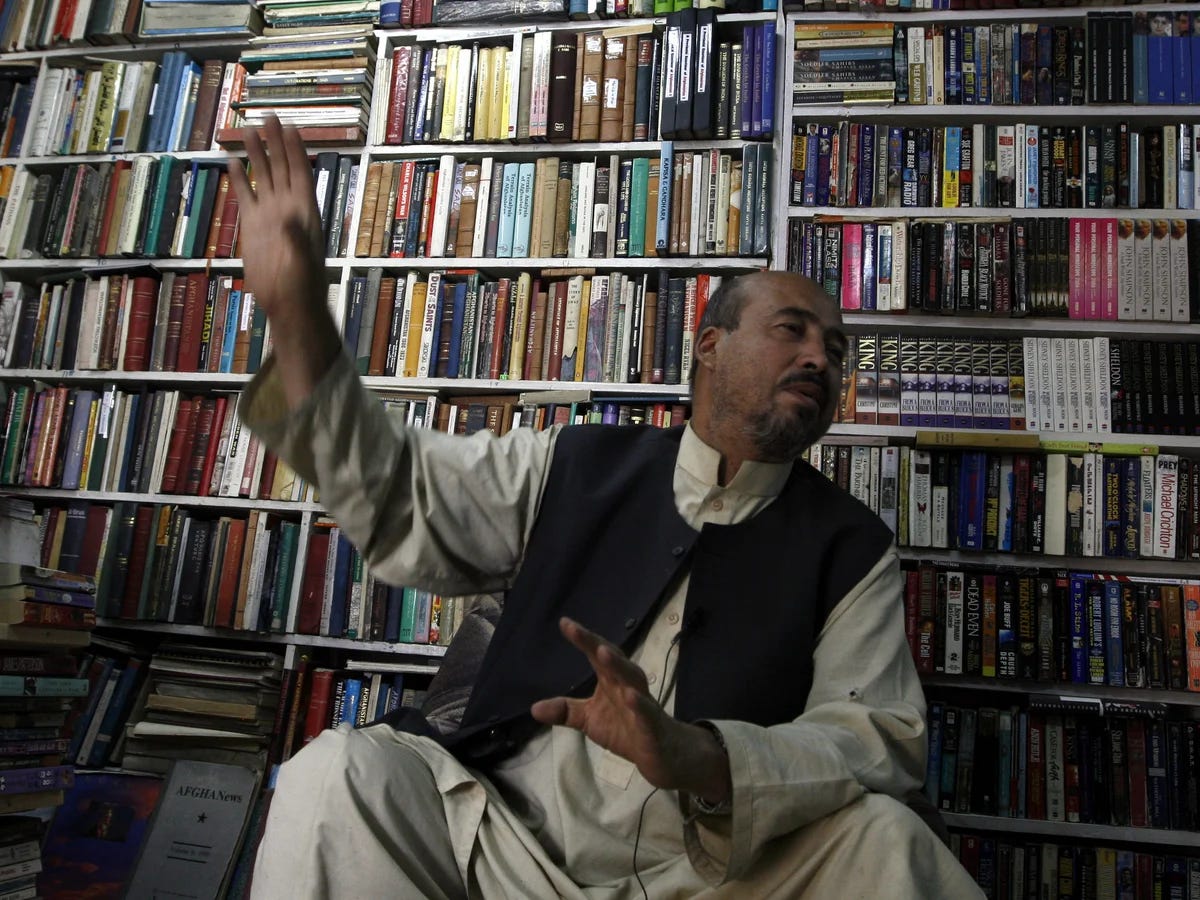
Naturally, I found that one too and read it.
I have a weakness for literary duels like this.
In his book, Rais is deeply offended by what he sees as an abuse of his hospitality - something he regards as a sacred principle in Afghan society. He argues that Seierstad fundamentally misunderstood Afghan family dynamics: the dense network of obligations, hierarchies and responsibilities in which individual happiness is often expected to give way to the interests of the family.
He writes that Seierstad arrived in Afghanistan with a picture already formed in her mind and simply fitted him and his family into it.
His broader accusation is even more interesting: outsiders come to Afghanistan convinced that they understand what they are seeing.
But they do not.
And I think there is something worth considering in that criticism.
I am always cautious about looking at another society and immediately judging it by rules imported from somewhere else. There is an old temptation to assume that our own cultural framework is universal - and that anything that does not fit inside it must simply be backward or wrong.
That is one reason I did not want to choose an easy side in this literary and cultural dispute.
But I also think there is a point beyond which cultural relativism stops being convincing.
For me, there remains a more universal test: injustice, humiliation and the suppression of another person’s will and dignity.
And after reading many books about the lives of women in Afghanistan - including books written by Afghan women themselves - I find myself giving greater weight to their voices.
Because again and again, across very different books and very different lives, I hear something painfully similar.
And it sounds remarkably close to what the Norwegian journalist described.