


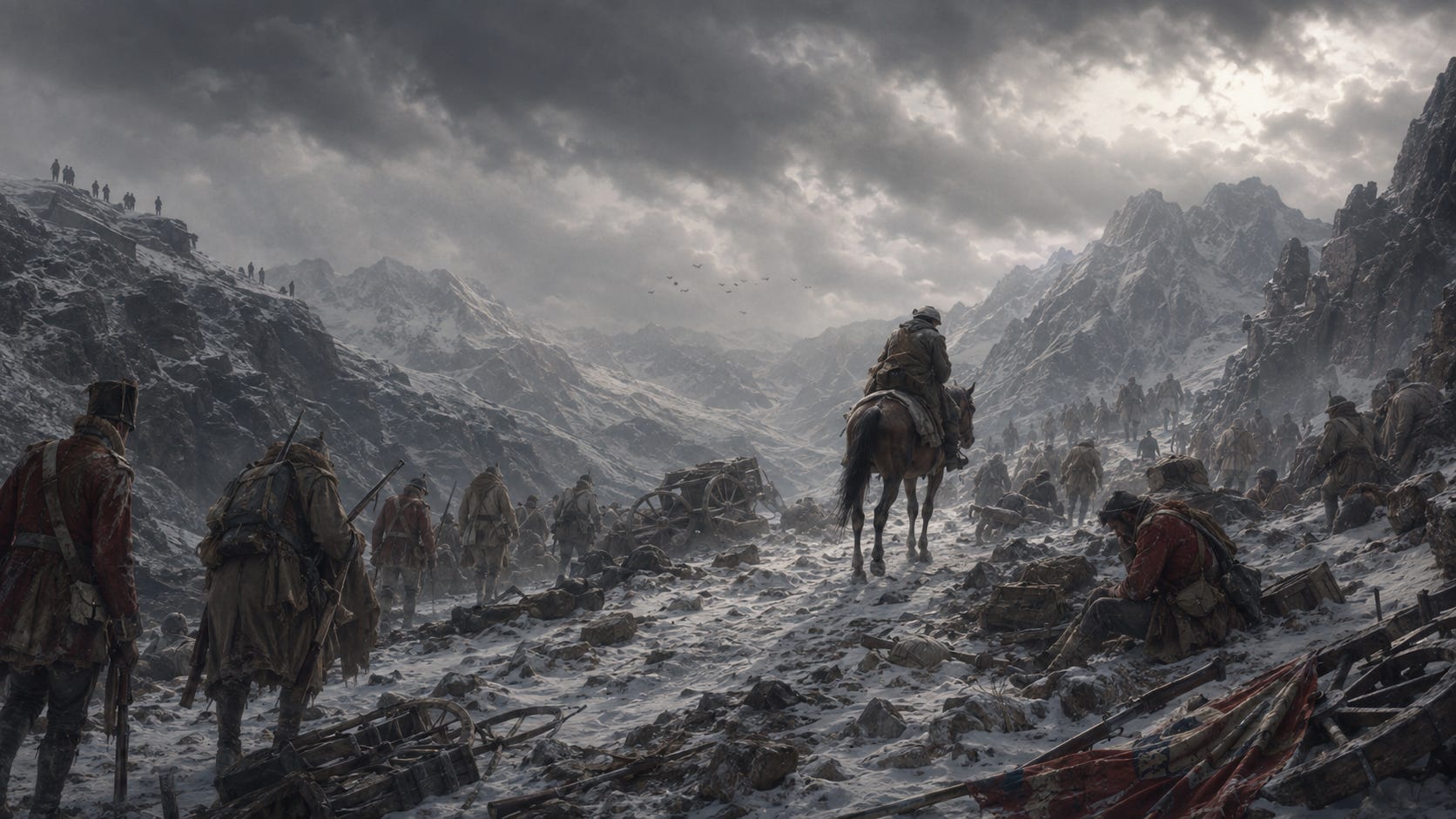
William Dalrymple’s Return of a King: The Battle for Afghanistan was probably one of the most gripping books I have read recently.
And this despite the fact that it is classic historical nonfiction, based on primary sources and other historical material.
Dalrymple manages to turn the events surrounding the First Anglo-Afghan War in the first half of the nineteenth century into such an extraordinary detective-like narrative that I simply could not put the book down and devoured it in just a few days.
Again and again drawing parallels with future conflicts in the country, the book tells the story of the first large-scale British invasion of Afghanistan: a military attempt to install a puppet - and essentially occupation - regime there in order to create a buffer zone protecting the British Empire’s most valuable colony, India, from the potential, and to a large extent imagined, ambitions of the Russian tsar.
The so-called Army of the Indus, “fulfilling its international duty” and “responding to the appeals of the oppressed Afghan people,” invaded the Kingdom of Kabul under the pretext of restoring a previously deposed shah to the throne.
At first, everything went surprisingly smoothly.
The British forced the ruling Amir Dost Mohammad Khan out of power, placed their protégé Shah Shuja on the throne, and established military control over Kabul and key parts of the country.
Does any of this sound familiar?
In principle, the Soviet Union followed a very similar pattern in 1979, as did the United States and its allies in 2001.
But the British made a fatal mistake that their unsuccessful successors would repeat again and again:
having entered Afghanistan relatively easily, they had absolutely no idea how they were going to get out.
The British ran Kabul for more than two years, and during that time their incompetent policies and the disgraceful behaviour of some senior representatives turned the local population and tribal leaders so strongly against them that it all ended in a powerful and extremely violent uprising.
With their tails between their legs, the Army of the Indus was forced to abandon Kabul with enormous losses and attempt to escape through the snow-covered mountain passes of the “conquered” Afghanistan.
Throughout this inglorious retreat, Afghan tribes tore the British column apart, carrying out a real massacre and repeatedly ambushing their enemy in the mountains.
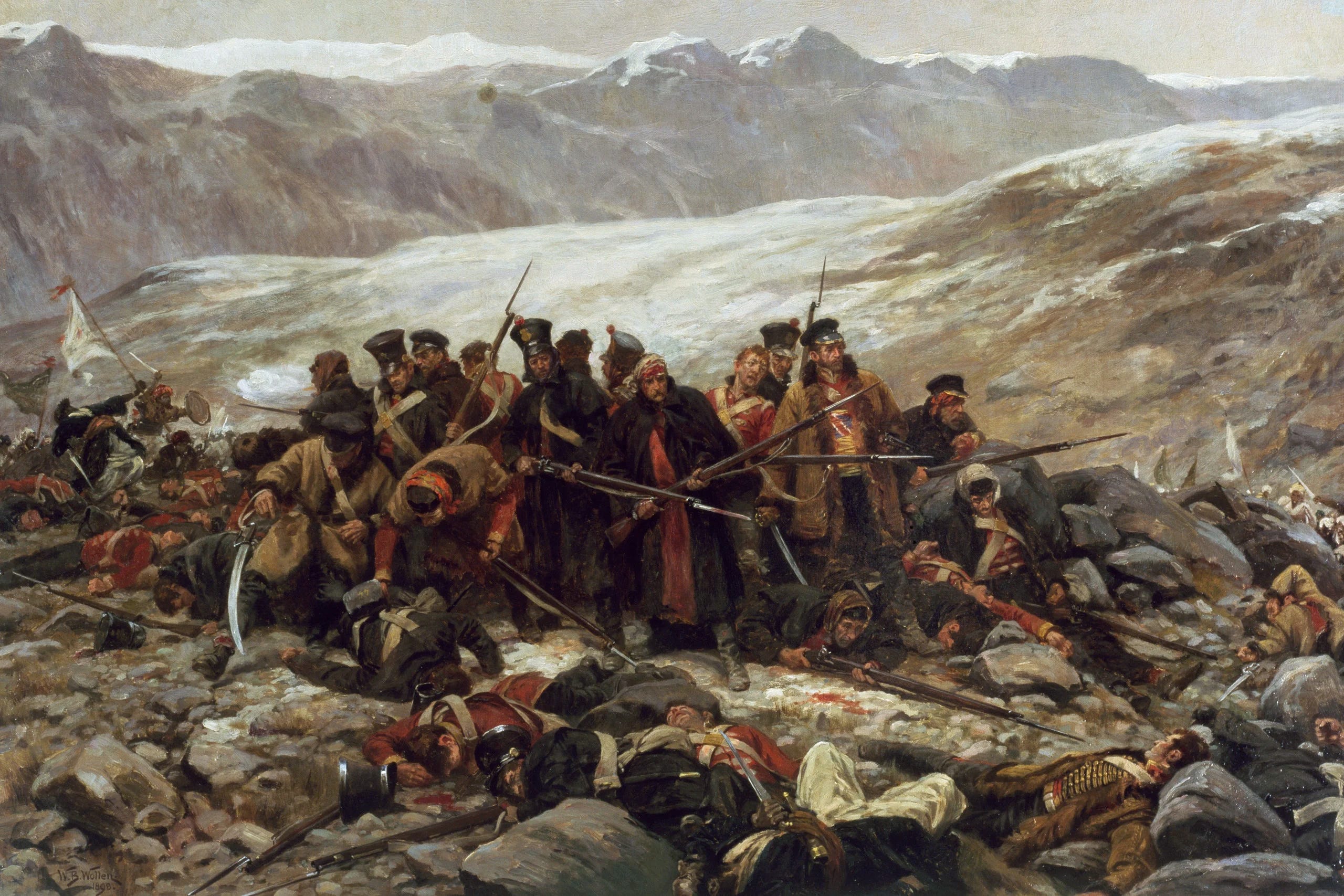
The Last Stand of the 44th Regiment at Gandamak, an 1898 painting by British artist William Barnes Wollen
According to the popular version of this story, the result of this humiliating fiasco was that, out of a column of more than 16,000 people, only one man reached the fortress at Jalalabad, which remained under British control: the wounded army surgeon William Brydon.
It is this episode that is depicted in Lady Butler’s famous painting Remnants of an Army.
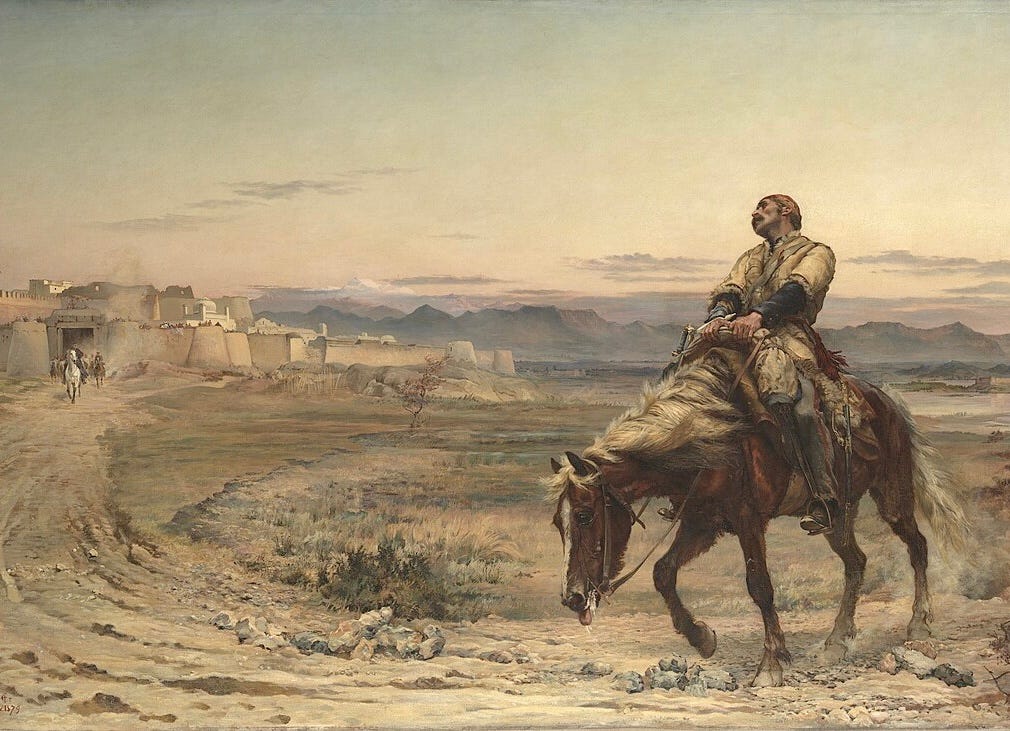
Of course, the real story was somewhat more complicated: some people were taken prisoner and later survived.
But the symbolic image of a single exhausted horseman reaching Jalalabad after the catastrophic retreat from Kabul proved so powerful that it effectively came to represent the entire British disaster.
So, as a result of its Afghan adventure, Britain lost an enormous amount of money, resources, and human lives, while Afghanistan eventually returned more or less to the same situation - including politically - that it had been in before the foreign invasion.
And the most interesting thing is that a remarkably similar scenario would repeat itself during the Soviet intervention in the 1980s and again after the apparently successful US-led operation that overthrew the Taliban in 2001.
Foreign powers kept stepping on the same historical rake again and again.
They invaded the country, became drawn into a conflict far deeper and more complicated than they had expected, encountered the extraordinary difficulty of governing Afghanistan, gradually realised that the resources being spent no longer matched the objectives they were trying to achieve - and eventually found themselves forced to withdraw.
There is a reason Afghanistan is so often called “the graveyard of empires.”
Some of the most powerful empires and superpowers in the world have tested their strength there - and none of them has ever managed to sit comfortably on this “anthill” for very long.