


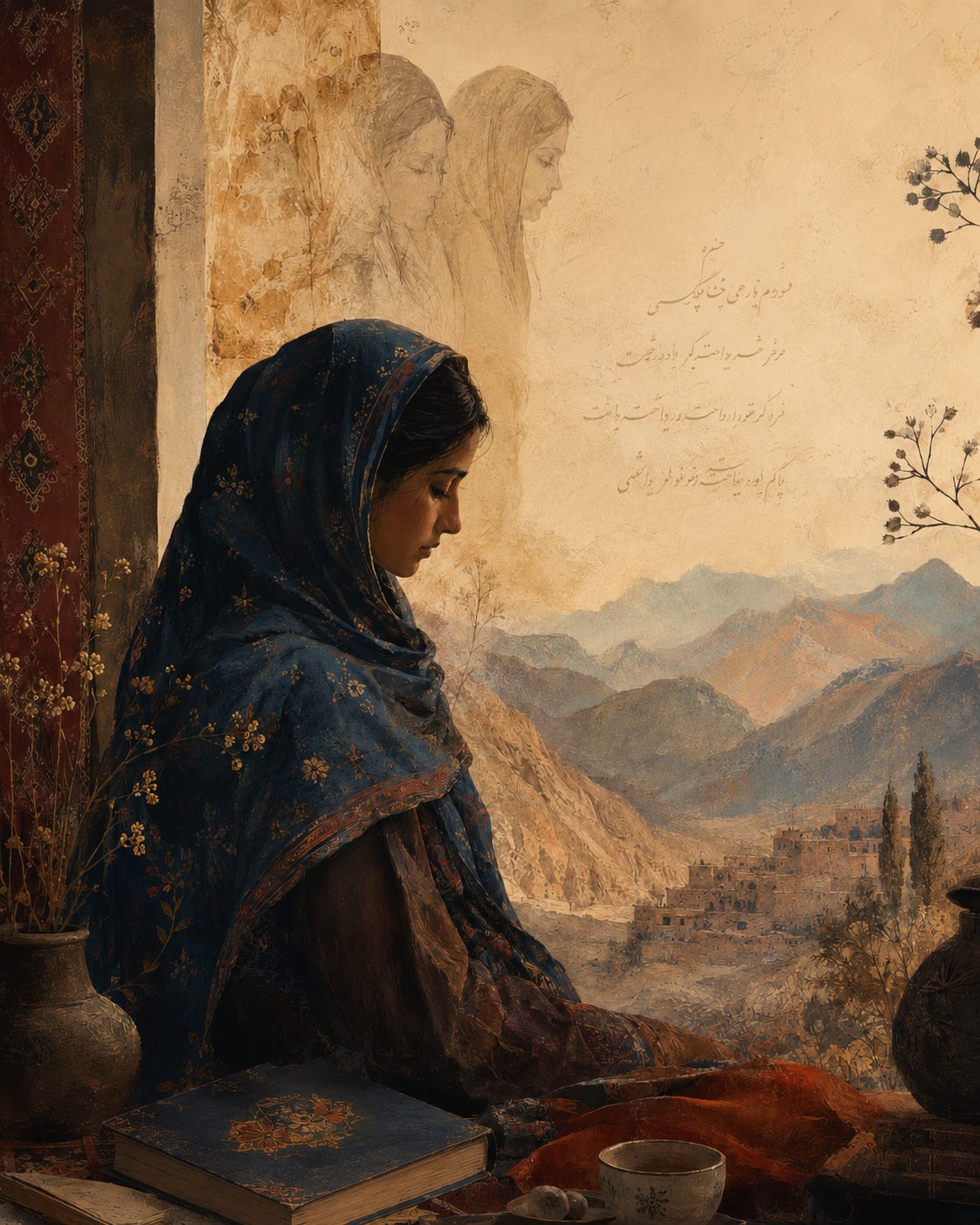
As part of my literary journey through Afghanistan, I came across a fascinating little book almost by accident: I Am the Beggar of the World: Landays from Contemporary Afghanistan.
It is a collection of Pashtun landays - short, two-line poems traditionally sung or recited, especially by women in eastern Afghanistan and western Pakistan.
I have to admit: I had never heard of this poetic tradition before. Discovering it was one of those unexpected moments that make a reading journey worthwhile.
The book itself is quite small, but remarkably concentrated. A landay is not quite poetry in the form most of us are used to. It is more like a sudden flash of a voice.
Two lines in which someone tries to fit love, shame, desire, pain, anger, loss, war, homeland, humour - and herself.
A traditional landay has only two lines and 22 syllables: nine in the first line and thirteen in the second. In Pashto, it often ends with the sound -ma or -na.
In English translation, that formal structure is extremely difficult to preserve. So what usually survives is not the exact metre, but the blow of the line - its image, rhythm and emotional force.
Landays are especially associated with women’s voices. For Pashtun women, they have long offered a way to say things that may be difficult, dangerous or impossible to say openly: about love, the body, sexuality, forced marriage, war, men, God, homeland, family and their own fate.
And once you realise this, the form begins to feel very different.
On the one hand, there is something deeply painful about it. You start thinking about what it means for a woman if the only space available for her thoughts, grief, humour, joy or desire is a short anonymous verse.
But there is another side to it as well.
Landays also show how fundamental the human need for expression really is. The need to put something into words. To be heard. To leave some trace of yourself behind.
Even when the entire space available for freedom is only two lines.
Here are a few landays from the book that stayed with me:
My body belongs to me; to others its mastery.
It is difficult to imagine a more compressed description of unfreedom: the body is yours, but the right to decide what happens to it belongs to someone else.
Dear homeland, I bring good news:
the infidels flee from your brutal embrace.
Here the voice moves beyond private life to Afghanistan itself - a wounded homeland that is loved even as its embrace becomes almost unbearable.
Your eyes aren’t eyes. They’re bees.
I can find no cure for their sting.
This one sounds like a love poem. But even here, there is a sting. Tenderness that hurts.
For me, I Am the Beggar of the World is not simply a book about an unfamiliar culture or an unusual poetic form.
It is a book about how difficult it is to completely silence a human voice.
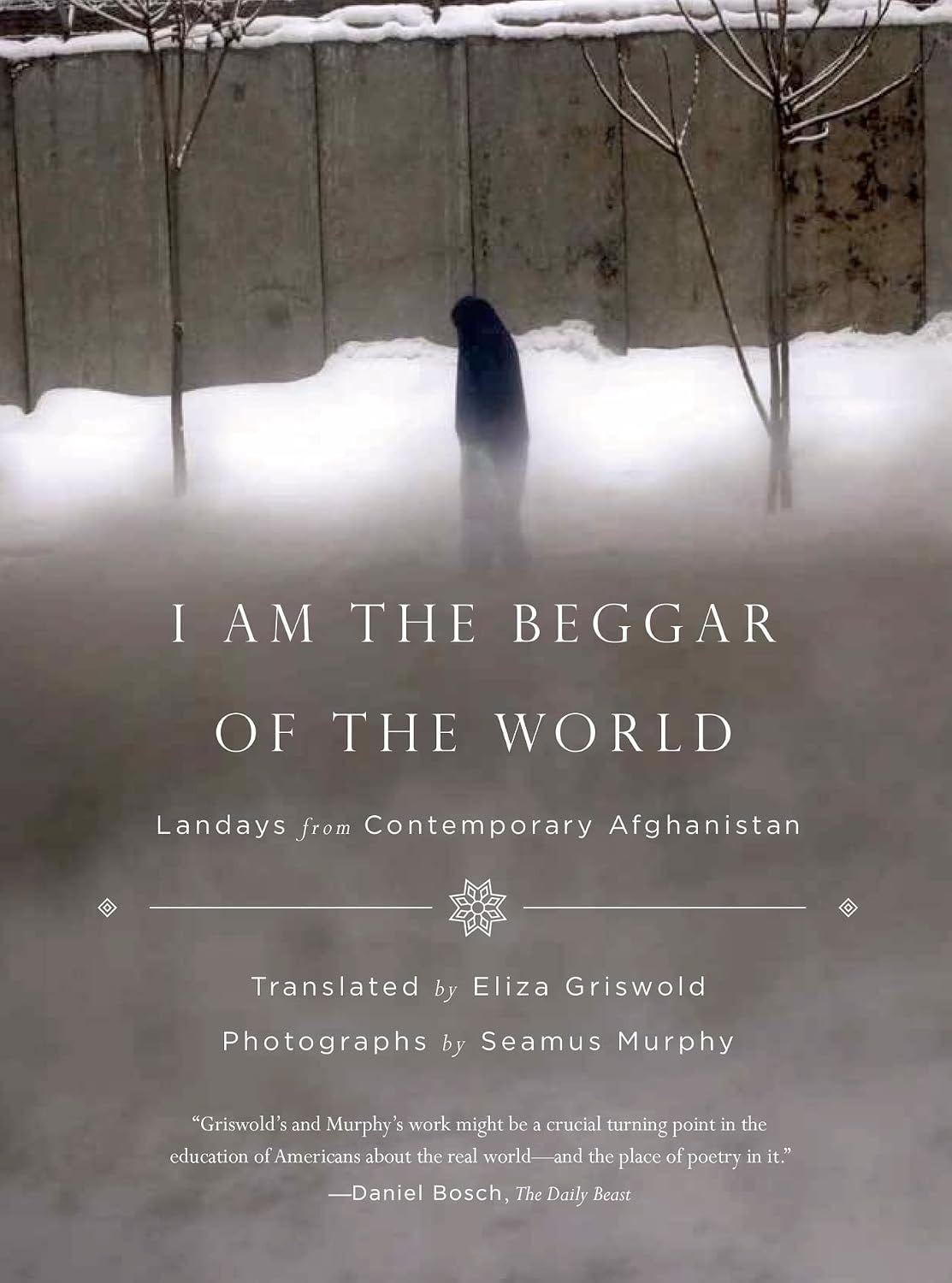
You can push it out of public life. You can forbid it. You can force it to whisper. You can take away the speaker’s name.
But then the voice finds another form.
Shorter.
Sharper.
Anonymous.
And sometimes dangerous.